
Why does February have twenty-eight days?
General News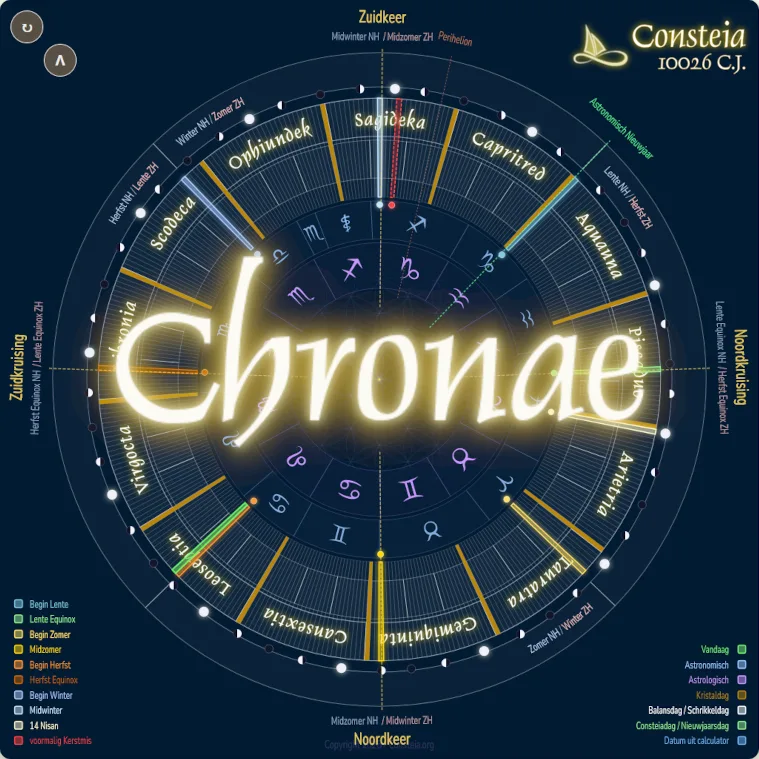
Our calendar comes from Rome. The original Roman year counted ten months and simply left winter uncounted. When that winter was finally given a name, January and February were added, tacked onto the end of a row that already existed. That is why September still means seven, October eight, November nine and December ten, while they sit in positions nine through twelve. We kept the names and lost the meaning along the way.
And February? It owes its twenty-eight days to superstition. The Romans held even numbers to be unlucky, so the months were given 29 or 31 days. There was an arithmetic problem in that, because twelve odd numbers always add up to an even sum, while the total for the year had to come out odd. One month therefore had to become even. The choice fell on February, the month of the februa, the rites of purification and the remembrance of the dead. The unlucky month was given the unlucky number.
The better known story is that the emperor Augustus later stole a day from February to make August as long as July. That story is a myth. It dates from the thirteenth century, from the scholar Johannes de Sacrobosco, and the sources contradict it: Censorinus and Macrobius give month lengths other than his theory requires, Varro already describes the later arrangement in 37 BC, and an Egyptian papyrus from 24 BC names Sextilis, the old name for August, with thirty-one days. That is years before the month received its imperial name.
Julius Caesar fixed the system to solar years in 46 BC. Pope Gregory XIII adjusted it in 1582, because Easter was slowly threatening to drift out of spring. And after that nothing of significance happened for more than four hundred years.
The seven day week has an origin entirely of its own. It comes from the Middle East, spread through the Roman Empire and was formally established by the emperor Constantine in AD 321. The week was therefore never designed to fit inside the month. It was laid over it centuries later, and ever since two systems have slid past each other without ever touching.
The word itself
There is another layer beneath this history, and it sits in the word we use every day.
Calendar goes back to the Latin calendarium, and that was a debt ledger. Roman moneylenders recorded in it who owed them what, because the interest fell due on the kalendae, the first day of each month. That day in turn owes its name to calare, to call out: at the new moon the priests called out how the month would run, and with it when payment fell due.
So the word by which we order our whole lives originally meant: the book in which stands what you still owe, on the day the priests have called out. Temple and creditor, together in one word.
That is why Chronae is not called a calendar. Chronae is a measure of time, and that distinction is more than wordplay. Where the one arose to administer who owes what, the other is there to read what is actually in motion.
What we lost along with it
The word month comes from moon. That was once literally true: a month was a lunar cycle, from new moon to new moon, about twenty-nine and a half days. You needed to own no calendar to know where you stood in the year. You looked up.
That connection has disappeared. The months of today are administrative units of varying length, without any bond to what happens in the sky. The solstices and equinoxes, the four moments at which the sun truly turns or crosses, appear in our diaries as a small piece of trivia somewhere at the bottom of the day.
We have come to measure time in units that measure nothing any more.
What Chronae does
Chronae is the measure of time of Consteia, and the starting point is simple: read time from what is actually in motion.
Thirteen months of twenty-eight days. Every month counts the same number of days and follows the rhythm of the moon as closely as a solar year allows. Thirteen times twenty-eight is three hundred and sixty-four, so the whole year runs in equal steps.
An honest caveat belongs here straight away. A lunar cycle lasts 29.53 days on average, and thirteen of those cycles together span more than 383 days. That does not fit into a solar year of 365.24 days. Every measure of time that wants to follow both moon and sun runs aground at this point and has to choose. The Gregorian calendar let go of the moon. The Islamic calendar let go of the seasons. Chronae looks for the middle: thirteen equal months within a year that stays true to the sun, with the actual position of the moon kept separately through the moon weeks, from New Moon Week through Waxing Week and Full Moon Week to Waning Week. In that way the month keeps a predictable rhythm and the moon stays visible as she truly stands. That is the concession, and we would rather say it out loud.
Months that point to the sky. The names are composed of the matching constellation and a numeral for the position: Aquauna, Piscaduo, Arietria, Tauratra, and so on up to Capritred. The eleventh month is Ophiundek, named after Ophiuchus, the Serpent Bearer. That constellation demonstrably lies on the ecliptic, and traditional astrology has left it out for centuries. Chronae acknowledges it.
Weeks of nine days. Three weeks of nine days make twenty-seven days. The twenty-eighth is the Crystal Day: a day that belongs to no week and to no obligation. The days themselves are called Fire Day, Water Day, Earth Day, Air Day, Wood Day, Metal Day, Ether Day, Astral Day and Light Day.
A year that begins at a moment instead of at an agreement. Consteia Day, the new year's day, falls exactly halfway between the Southern Tropic and the Northern Crossing, that is, halfway between the midwinter solstice and the spring equinox. That usually comes down to the beginning of February. It is a calculated moment, not a decree. In a leap year the Balance Day closes the year.
A year count that reaches further back. Chronae counts in Consteia years, abbreviated C.Y., with Warren Field in Scotland as its zero point. There lies a row of pits from around 8,000 BC, aligned to the midwinter solstice and the lunar cycle, widely regarded as the oldest measure of time people have ever made. Add eight thousand to the Gregorian year and you have the Consteia year. 2026 is therefore 10026 C.Y.
Today is Earth Day 21 Leoseptia 10026 C.Y., in the New Moon Week.
Why this matters
Chronae replaces nothing. Your appointments stand, your birthday stays where it is, the train leaves at the same time. What Chronae does is something else and something smaller, and for that reason it carries through.
It makes visible that the calendar is a design. Someone made it, for reasons long since forgotten, and we came to inhabit it as though it were a law of nature. Once that realisation is there, the question follows of its own accord: what else do I assume without ever having examined it? Which rhythms do I live because they suit me, and which because they were handed to me?
That is the whole intention. Chronae is symbolism in the most practical sense of the word. A measure of time that reminds you every day anew that the things you take for granted were once thought up by people. And that what people have thought up can be thought up again.
This is where Consteia began. Everything that has been added since rests on this thought.
See for yourself
On the Chronae page you will find the full year round, with the thirteen months, the four cardinal points, the moon phases and the special days. There is also a calculator with which you can convert your own date of birth into a Consteia date.
Look at where you come from in time. It is a strange experience to see your own birthday again in a system that does add up.